
 MOHAMMAD ABUBAKR
Introduction
Putting off financial decisions may seem harmless today.
However, delaying important money choices can quietly become one of the most expensive financial habits.
Whether it’s waiting to start saving, postponing investing, ignoring debt, or avoiding a monthly budget, procrastination can reduce your financial opportunities over time.
The longer you delay, the fewer options you may have to reach your financial goals.
Fortunately, small actions taken today can make a meaningful difference in the future.
In this guide, you’ll learn the hidden costs of financial procrastination and practical ways to take control of your finances before delays become expensive mistakes.
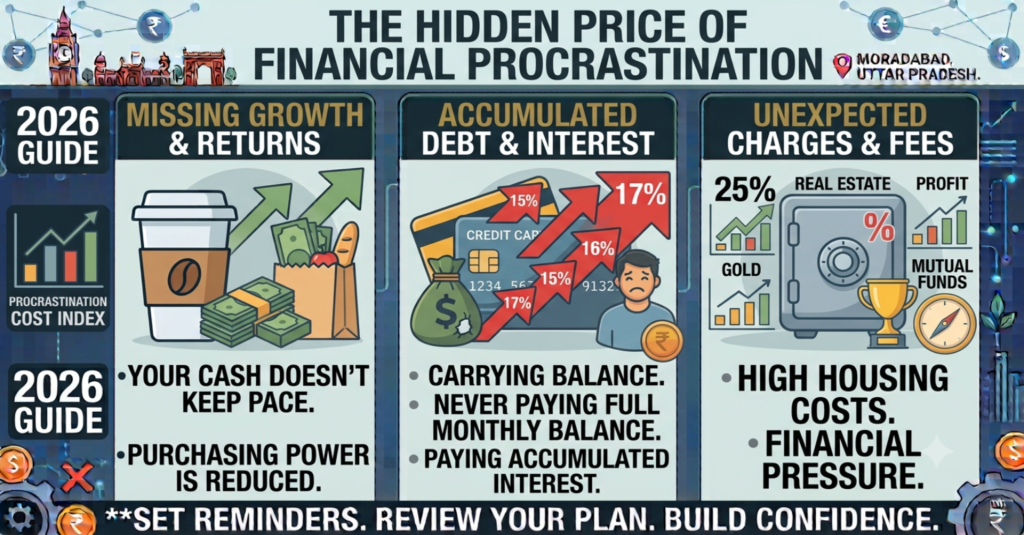
Why Financial Procrastination Matters
Money decisions often become more valuable when they are made early.
Taking action sooner can help you:
- Build savings.
- Reduce financial stress.
- Grow investments over time.
- Avoid unnecessary debt.
- Improve long-term financial security.
Even small financial steps today can produce meaningful long-term benefits.
1. Waiting to Start Saving
Many people believe they’ll begin saving once they earn more money.
Unfortunately, that day often keeps getting pushed further into the future.
Starting with small, consistent contributions is usually more effective than waiting for the “perfect” time.
2. Delaying Investments
Time is one of the most valuable assets in investing.
The earlier you begin investing, the more opportunity your money has to benefit from long-term growth.
Waiting several years may reduce the potential impact of consistent investing over time.
Building long-term wealth requires patience and consistency. Read our Why Financial Freedom Takes Longer Than Most People Expect guide to understand how small financial decisions today can shape your future.
3. Ignoring High-Interest Debt
Delaying debt repayment can increase the total amount paid in interest.
The longer high-interest balances remain unpaid, the more difficult they may become to eliminate.
Creating a repayment plan early can reduce long-term financial pressure.
4. Avoiding a Monthly Budget
Many people postpone budgeting because they think it will be complicated.
In reality, a simple budget helps you:
- Track spending.
- Control expenses.
- Build savings.
- Reach financial goals.
Waiting to create a budget often makes financial problems harder to identify.
5. Waiting Too Long to Build an Emergency Fund
Unexpected expenses rarely arrive with advance notice.
Without emergency savings, many households rely on credit cards or loans to cover emergencies.
Building an emergency fund gradually can improve financial stability.
6. Postponing Retirement Planning
Retirement may seem far away, especially for younger adults.
However, starting retirement savings earlier provides more years for consistent contributions and long-term investment growth.
Small contributions today may have a greater impact than larger contributions started much later.
Small Delays Can Become Big Costs
Financial procrastination rarely creates immediate problems.
Instead, its effects often grow quietly over months and years.
Taking action sooner can strengthen your financial future.
7. Delaying Insurance Reviews
Many people purchase insurance and never review their policies again.
Over time, your financial needs may change because of:
- A new job.
- Marriage.
- Buying a home.
- Starting a family.
- Increased income.
Reviewing your insurance coverage regularly helps ensure it continues to match your current financial situation.
8. Putting Off Financial Education
Learning about money is one of the best investments you can make.
Understanding topics such as:
- Budgeting.
- Saving.
- Investing.
- Credit management.
- Tax planning.
can help you make better financial decisions throughout your life.
The sooner you improve your financial knowledge, the sooner you can apply it.
9. Avoiding Regular Financial Checkups
Many people only review their finances when a problem occurs.
Instead, schedule a monthly financial review to check your:
- Spending.
- Savings progress.
- Debt balances.
- Investment contributions.
- Financial goals.
Regular reviews help you identify small issues before they become major challenges.
10. Waiting for the “Perfect Time”
One of the biggest forms of financial procrastination is believing that the perfect time will eventually arrive.
Whether you’re planning to save, invest, pay down debt, or create a budget, waiting often delays your progress.
Starting with small, manageable steps today is usually more valuable than postponing action indefinitely.
Common Financial Procrastination Mistakes
Many people unintentionally delay their financial success through avoidable habits.
Try to avoid these common mistakes:
- Waiting to create a budget.
- Delaying emergency savings.
- Postponing investment contributions.
- Ignoring high-interest debt.
- Never reviewing financial goals.
- Waiting for the “perfect” financial situation.
- Avoiding important money decisions.
Small actions taken consistently often create the biggest long-term results.
Investor.gov, the official investor education website from the U.S. Securities and Exchange Commission (SEC), offers free educational resources on investing, retirement planning, saving, diversification, and long-term financial decision-making. These resources can help you make informed financial choices and avoid the long-term costs of financial procrastination.
Frequently Asked Questions
Why is financial procrastination so common?
Many people delay financial decisions because they feel overwhelmed, uncertain, or believe they’ll have more time later.
Breaking large financial goals into smaller steps can make getting started easier.
Is it too late to improve my finances?
In most cases, no.
While starting earlier has advantages, taking action today is usually more beneficial than continuing to wait.
What is the easiest way to stop procrastinating with money?
Choose one simple financial task to complete today, such as creating a budget, opening a savings account, increasing your monthly savings, or reviewing your spending.
Small wins often build momentum.
How often should I review my finances?
A monthly financial review is a practical way to monitor your progress, adjust your budget, and stay focused on your long-term goals.
Final Thoughts
Financial procrastination may not seem expensive at first, but delaying important money decisions can quietly reduce your financial opportunities over time.
Whether you’re saving, investing, paying off debt, or planning for retirement, taking action today is often more valuable than waiting for the perfect moment.
Progress doesn’t require perfection.
Consistent financial habits, even small ones, can help you build greater financial security and long-term wealth.
The best time to improve your finances is the time you decide to begin.