
 MOHAMMAD ABUBAKR
Introduction
Many people dream of achieving financial freedom.
They imagine reaching a point where money causes less stress, important goals are within reach, and they have more flexibility in how they live and work.
However, financial freedom rarely happens overnight.
For most Americans, it’s the result of years of consistent saving, smart investing, responsible spending, and careful planning.
Understanding why the journey takes time can help you stay motivated and avoid unrealistic expectations.
In this guide, you’ll learn why financial freedom takes longer than most people expect and the habits that can help you make steady progress.
What Does Financial Freedom Really Mean?
Financial freedom means having enough financial stability to make life decisions with greater confidence.
For many people, this includes:
- Covering monthly expenses comfortably.
- Having emergency savings.
- Managing debt responsibly.
- Investing for the future.
- Working toward long-term financial goals.
Financial freedom looks different for everyone because personal goals and lifestyles vary.
1. Wealth Is Built Through Consistency
Building wealth is usually the result of small financial decisions repeated over many years.
Examples include:
- Saving every month.
- Investing consistently.
- Following a budget.
- Avoiding unnecessary debt.
- Increasing contributions as income grows.
Consistency often has a greater impact than occasional large financial wins.
Building wealth starts with daily financial habits. Read our Money Habits That Separate the Rich From Everyone Else guide to discover practical strategies that support long-term financial success.
2. Compound Growth Takes Time
One of the biggest advantages in personal finance is time.
Money that remains invested for many years has more opportunity to benefit from long-term compound growth.
This is why starting early—even with modest contributions—can make a meaningful difference over time.
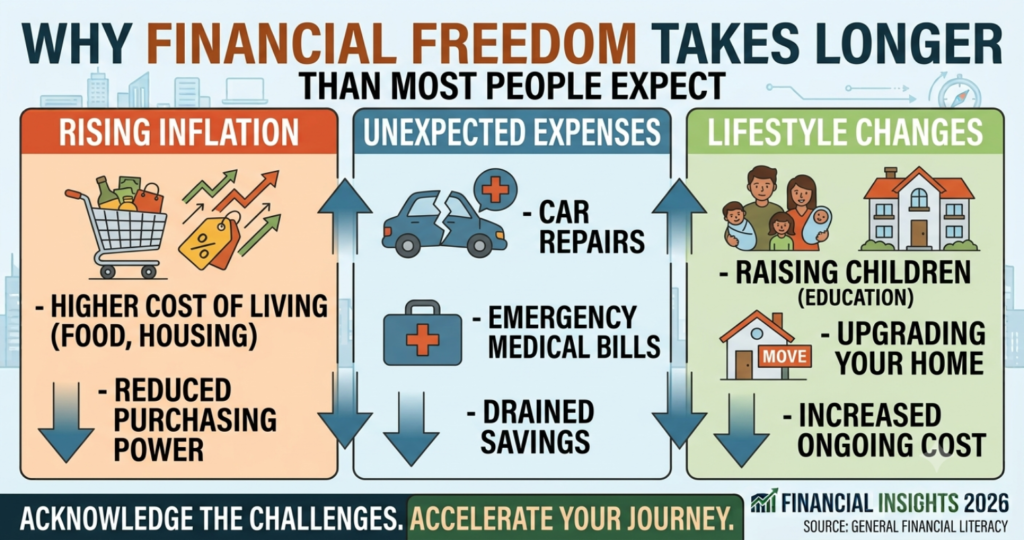
3. Life Brings Unexpected Expenses
Few financial journeys follow a perfectly straight path.
Unexpected events such as:
- Medical bills.
- Car repairs.
- Home maintenance.
- Job changes.
- Family emergencies.
can temporarily slow financial progress.
Preparing for these situations with emergency savings helps keep long-term goals on track.
4. Income Usually Grows Gradually
Most careers involve gradual income growth rather than immediate high earnings.
As income increases, many people are able to:
- Save more.
- Invest more.
- Reduce debt.
- Strengthen financial security.
Patience is an important part of the wealth-building process.
5. Lifestyle Inflation Can Delay Progress
As earnings increase, spending often increases too.
Examples include:
- Larger homes.
- More expensive vehicles.
- Luxury subscriptions.
- Frequent dining out.
Keeping lifestyle inflation under control can free up more money for saving and investing.
6. Long-Term Investing Requires Patience
Financial markets naturally experience periods of growth and decline.
Many successful long-term investors stay focused on their overall financial plan instead of reacting to short-term market movements.
Patience is often one of the most valuable investing habits.
Progress Is More Important Than Speed
Building financial freedom isn’t a race.
Steady progress over many years often produces stronger results than trying to achieve quick financial success.
7. Financial Goals Change Over Time
As life changes, your financial priorities often change as well.
You may eventually focus on goals such as:
- Buying a home.
- Starting a family.
- Saving for education.
- Preparing for retirement.
- Building a business.
Reviewing your financial plan regularly helps ensure your savings and investments continue supporting your current priorities.
8. Financial Education Improves Decision-Making
Building financial freedom isn’t only about earning more money.
Learning how to manage money effectively can have a lasting impact.
Important areas to understand include:
- Budgeting.
- Investing.
- Credit management.
- Tax planning.
- Retirement savings.
Improving your financial knowledge can help you make more confident long-term decisions.
9. Focus on Progress Instead of Comparison
Comparing your financial journey with friends, coworkers, or social media can become discouraging.
Everyone has different:
- Income levels.
- Financial responsibilities.
- Career paths.
- Family situations.
- Long-term goals.
Measuring your own progress is often far more helpful than comparing yourself with others.
10. Stay Committed to the Long-Term Plan
Financial freedom is usually achieved through years of disciplined habits rather than one major financial breakthrough.
Stay committed by:
- Reviewing your budget regularly.
- Saving consistently.
- Investing for long-term goals.
- Reducing unnecessary debt.
- Adjusting your financial plan as your life changes.
Long-term discipline often produces stronger financial results than chasing quick success.
Common Mistakes That Delay Financial Freedom
Many people unintentionally slow their financial progress through avoidable habits.
Try to avoid these common mistakes:
- Spending every paycheck.
- Saving inconsistently.
- Ignoring a monthly budget.
- Carrying high-interest debt for too long.
- Trying to get rich quickly through risky investments.
- Delaying retirement planning.
- Increasing lifestyle spending after every raise.
Replacing these habits with consistent financial discipline can significantly improve long-term results.
Investor.gov, the official investor education website from the U.S. Securities and Exchange Commission (SEC), offers free educational resources on investing, compound growth, retirement planning, diversification, and long-term financial decision-making. These materials can help you build a stronger foundation for lasting financial freedom.
Frequently Asked Questions
How long does it take to achieve financial freedom?
The timeline is different for everyone.
It depends on factors such as income, spending habits, savings rate, investment growth, debt levels, and personal financial goals.
Can I achieve financial freedom on an average income?
Yes.
Many people make meaningful financial progress by budgeting carefully, saving consistently, investing for the long term, and avoiding unnecessary debt.
What is the biggest obstacle to financial freedom?
One of the biggest challenges is inconsistency.
Small financial habits repeated over many years often matter more than occasional large financial decisions.
Is financial freedom only about retirement?
No.
Financial freedom can also mean having enough financial stability to make important life decisions, manage unexpected expenses, and pursue personal goals with greater confidence.
Final Thoughts
Financial freedom usually takes longer than most people expect because it is built through patience, discipline, and consistent financial habits.
Rather than searching for shortcuts, focus on building a strong financial foundation through budgeting, saving, investing, and thoughtful spending.
Every positive financial decision moves you one step closer to greater financial security.
Although the journey may take time, steady progress today can create lasting financial freedom in the years ahead.