
 MOHAMMAD ABUBAKR
Introduction
Reaching your first $10,000 in savings is a major financial milestone.
For many Americans, it can also be the most difficult one.
Early in your financial journey, you’re often balancing rent or mortgage payments, groceries, transportation, insurance, debt, and other everyday expenses. Finding extra money to save can feel nearly impossible.
The good news is that building your first $10,000 usually becomes easier once you develop consistent financial habits.
In this guide, you’ll learn why this milestone feels so challenging and the practical strategies that can help you reach it faster.
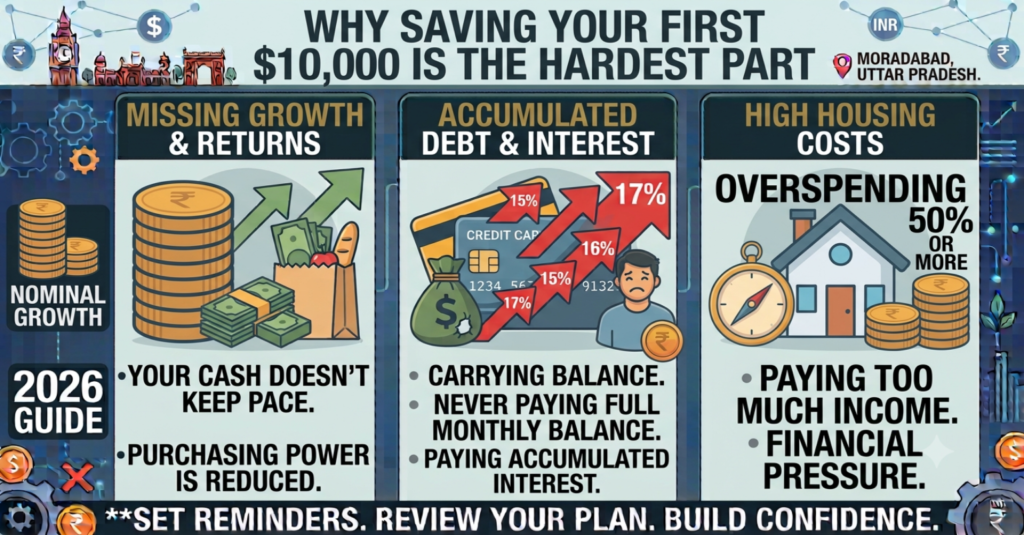
Why the First $10,000 Feels So Difficult
The first $10,000 requires changing habits, creating discipline, and building momentum.
Unlike later stages of wealth building, you’re starting from zero.
That means every dollar saved comes directly from changes in your spending, budgeting, or income.
Once those habits become routine, continuing to save often feels much more manageable.
1. You’re Building New Financial Habits
Saving money consistently is a skill.
At first, it may require changing how you:
- Spend money.
- Track expenses.
- Plan purchases.
- Prioritize savings.
Over time, these habits become easier and more automatic.
2. Everyday Expenses Slow Your Progress
Many household expenses compete with your savings goals.
Examples include:
- Housing.
- Groceries.
- Transportation.
- Insurance.
- Utilities.
- Healthcare.
Even small increases in these costs can reduce the amount you’re able to save each month.
3. Unexpected Expenses Interrupt Your Savings
Life rarely follows a perfect financial plan.
Unexpected costs such as:
- Car repairs.
- Medical bills.
- Home maintenance.
- Emergency travel.
can temporarily slow your savings progress.
Planning for these events with an emergency fund helps you avoid starting over.
4. Small Purchases Add Up
Many people underestimate the impact of daily spending.
Examples include:
- Coffee.
- Food delivery.
- Streaming subscriptions.
- Convenience store purchases.
- Impulse online shopping.
Reducing only a few of these expenses can create additional room in your budget.
Reducing unnecessary daily spending can help you reach your savings goals faster. Read our The Everyday Expenses That Drain Your Wallet guide to identify common expenses that quietly reduce your savings.
5. Income Growth Takes Time
Early in your career, income often increases gradually rather than all at once.
Instead of waiting for a larger paycheck, focus on building the habit of saving consistently with the income you have today.
As your earnings grow, your savings can grow too.
6. Motivation Can Fade
Saving thousands of dollars takes time.
Without clear financial goals, it’s easy to lose motivation.
Many people stay focused by saving for goals such as:
- An emergency fund.
- A home down payment.
- Financial independence.
- Retirement.
- Greater financial security.
Breaking a large goal into smaller milestones can make the journey feel more achievable.
Momentum Changes Everything
The hardest part is often getting started.
Once saving becomes part of your routine, reaching larger financial milestones usually becomes much easier.
7. Automate Your Savings
One of the easiest ways to reach your first $10,000 is to remove emotion from the process.
Setting up automatic transfers to your savings account ensures you save consistently without having to remember each month.
Many people choose to:
- Save a portion of every paycheck.
- Increase automatic contributions after a raise.
- Transfer bonuses or tax refunds into savings.
Automation can help you stay on track even during busy months.
8. Increase Your Income When Possible
While reducing unnecessary expenses is helpful, increasing your income can accelerate your savings.
Some common ways include:
- Freelancing.
- Taking a part-time job.
- Starting a side business.
- Selling unused items.
- Asking for a promotion or raise.
Even a modest increase in monthly income can have a significant impact on your savings over time.
9. Track Your Progress Regularly
Watching your savings grow can be a powerful motivator.
Review your progress every month and celebrate smaller milestones, such as:
- Your first $1,000.
- Your first $2,500.
- Halfway to $10,000.
- Your first $5,000.
These milestones help keep you focused on the bigger goal.
10. Stay Patient and Consistent
Building savings takes time.
There may be months when unexpected expenses slow your progress.
Instead of becoming discouraged, continue saving what you can.
Consistency often matters more than the amount you save in any single month.
Small contributions made regularly can grow into meaningful financial security.
Common Saving Mistakes to Avoid
Many people delay reaching their first $10,000 because of avoidable habits.
Try to avoid:
- Waiting for the “perfect” time to start saving.
- Spending every pay raise.
- Ignoring a monthly budget.
- Frequently dipping into your savings.
- Not having a clear savings goal.
- Giving up after unexpected expenses.
- Failing to automate your savings.
Building better habits can make your financial goals easier to achieve.
The Consumer Financial Protection Bureau (CFPB) provides free resources on budgeting, saving money, emergency funds, and financial planning. These tools can help you build strong saving habits and stay on track as you work toward your first $10,000.
Frequently Asked Questions
How long does it take to save your first $10,000?
The timeline depends on your income, expenses, and how much you save each month.
Some people reach the goal within a year, while others may take several years.
The important part is making steady progress.
Should I invest before saving $10,000?
That depends on your financial situation.
Many people first build an emergency fund while also contributing to long-term investments when possible.
Your priorities should reflect your personal financial goals.
What if I can only save a small amount?
Small amounts still matter.
Saving consistently—even $25 or $50 at a time—can build momentum and improve your financial habits over time.
Why is the first $10,000 considered the hardest?
The first $10,000 often requires developing new financial habits, controlling spending, and saving consistently.
Once those habits become routine, building additional wealth usually becomes easier.
Final Thoughts
Saving your first $10,000 is about much more than reaching a number.
It’s about developing the habits that support long-term financial success.
By budgeting carefully, reducing unnecessary expenses, increasing your income when possible, and saving consistently, you can build a strong financial foundation.
The first $10,000 may be the hardest milestone, but it also teaches the skills that can help you achieve much bigger financial goals in the future.