
 MOHAMMAD ABUBAKR
Retirement planning is one of the most important financial goals you’ll ever have. Yet one question continues to confuse many Americans: How much should you save for retirement each month?
There isn’t a one-size-fits-all answer because everyone’s income, lifestyle, retirement goals, and expected retirement age are different. However, there are proven guidelines that can help you determine a realistic monthly savings target.
The good news is that you don’t have to be wealthy to build a comfortable retirement. What matters most is starting early, saving consistently, and increasing your contributions as your income grows.
In this guide, you’ll learn how much to save each month, the factors that affect your retirement goals, and practical ways to stay on track.
Why Monthly Retirement Savings Matter
Saving for retirement every month builds consistency.
Instead of trying to invest large amounts occasionally, monthly contributions allow your investments to grow steadily through compound returns.
Why Smart Savers Use More Than One Bank Account
Regular investing also helps you:
- Build financial discipline
- Reduce the temptation to spend
- Take advantage of market fluctuations
- Grow wealth over decades
Even modest monthly contributions can become substantial retirement savings over time.
A Common Retirement Savings Rule
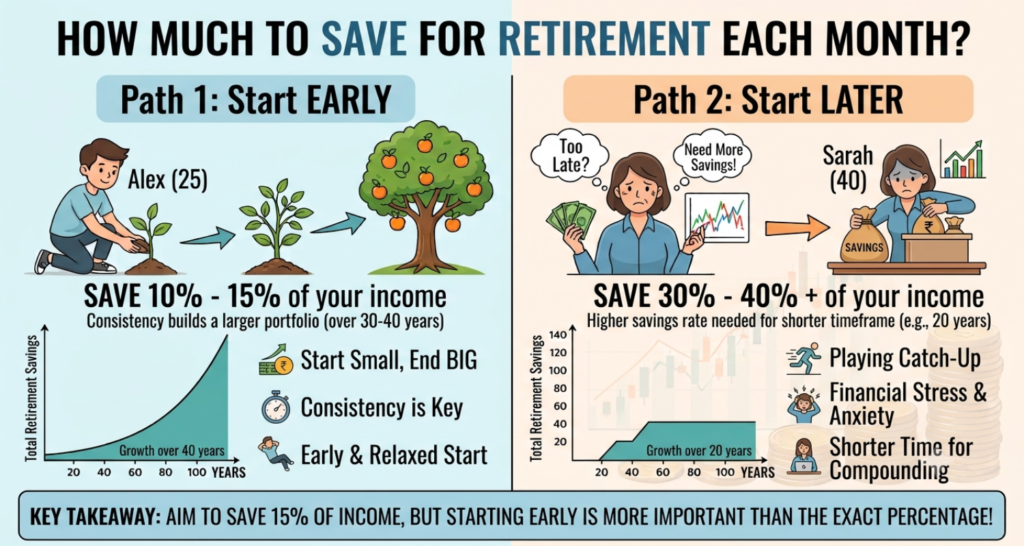
Many financial professionals recommend saving 10% to 15% of your annual income for retirement.
If you begin saving later in life, you may need to save 15% to 20% or more to reach your retirement goals.
Here are some examples:
| Annual Income | 10% Savings | 15% Savings | Monthly Savings (15%) |
|---|---|---|---|
| $40,000 | $4,000 | $6,000 | $500 |
| $60,000 | $6,000 | $9,000 | $750 |
| $80,000 | $8,000 | $12,000 | $1,000 |
| $100,000 | $10,000 | $15,000 | $1,250 |
These are starting points, not strict rules.
Factors That Affect How Much You Should Save
Your ideal monthly retirement savings depend on several factors.
1. Your Age
Age plays a major role.
Someone who starts investing at age 25 has decades for compound growth.
Someone beginning at age 45 has fewer years and may need to save more each month.
The earlier you begin, the easier it becomes to build wealth.
2. Your Desired Retirement Lifestyle
Ask yourself:
- Do you want to travel frequently?
- Will you own your home?
- Do you plan to relocate?
- What healthcare costs might you face?
- Will you continue working part-time?
Your lifestyle goals directly influence how much you’ll need in retirement.
3. Your Current Savings
If you’ve already built retirement savings, your monthly contribution may differ from someone starting from zero.
Review your current retirement accounts regularly to measure your progress.
4. Expected Retirement Age
Retiring earlier generally requires more savings.
For example:
- Retiring at 55 often requires a larger retirement fund.
- Retiring at 67 provides additional years to save and fewer years your savings must support.
Choosing your retirement age helps estimate your monthly savings target.
5. Employer Retirement Benefits
Many employers offer 401(k) retirement plans with matching contributions.
For example:
- You contribute 5% of your salary.
- Your employer also contributes 5%.
This employer match effectively boosts your retirement savings.
Whenever possible, contribute enough to receive the full employer match.
The Power of Compound Growth
Compound growth is one of the biggest reasons to start saving early.
It allows your investment earnings to generate additional earnings over time.
Consider two investors.
Investor A
- Starts saving at age 25
- Invests $400 every month
Investor B
- Starts saving at age 40
- Invests the same amount
Even if both earn similar investment returns, Investor A is likely to accumulate significantly more because the investments have more time to grow.
Time is one of the most valuable assets in retirement planning.
What If You Can’t Save 15%?
Many people cannot immediately save 15% of their income.
That’s perfectly normal.
Instead:
- Start with 3%.
- Increase to 5%.
- Move to 8%.
- Eventually reach 10% or more.
Small increases each year can make a significant difference over several decades.
Starting today is more important than waiting for the perfect time.
Retirement Accounts to Consider
Choosing the right account can help maximize your savings.
Common retirement accounts include:
401(k)
Many employers offer this workplace retirement plan.
Benefits may include:
- Employer matching
- Automatic payroll deductions
- Tax advantages
Individual Retirement Account (IRA)
IRAs provide another way to save for retirement.
Depending on the account type, they may offer tax-deferred or tax-free growth.
Roth IRA
Qualified withdrawals in retirement are generally tax-free, making this account attractive for many long-term investors.
Choose the account that best fits your financial goals and tax situation.
Increase Contributions as Your Income Grows
One of the easiest ways to grow retirement savings is by increasing contributions whenever you receive:
- A raise
- A promotion
- A bonus
- Additional income
For example, increasing your retirement contribution by just 1% each year can lead to substantially higher savings over time.
Because the increase is gradual, it often has little impact on your monthly budget.
Mistakes to Avoid
Avoid these common retirement planning mistakes.
Waiting Too Long
Delaying retirement savings reduces the power of compound growth.
Starting today—even with a small amount—is usually better than waiting.
Ignoring Employer Matching
Employer matching is essentially additional retirement savings.
Failing to contribute enough to receive the full match means missing valuable benefits.
Withdrawing Retirement Funds Early
Early withdrawals may reduce long-term growth and could trigger taxes or penalties.
Whenever possible, leave retirement savings invested.
Not Reviewing Your Plan
Life changes.
Marriage, children, career changes, and income increases may require adjustments to your retirement strategy.
Review your plan at least once each year.
Investing Too Conservatively
Keeping all retirement savings in cash may reduce your long-term growth potential.
A diversified investment portfolio often provides better long-term results.
How to Make Retirement Saving Easier
Consistency is the key to success.
These habits can help:
- Automate monthly contributions.
- Create a realistic budget.
- Reduce unnecessary spending.
- Pay off high-interest debt.
- Build an emergency fund.
- Increase contributions after every raise.
- Review your investment allocation annually.
Simple habits often produce the biggest long-term results.
Is It Ever Too Late to Start?
No.
Although starting early provides the greatest advantage, it’s never too late to improve your retirement outlook.
If you’re starting later:
- Save a higher percentage of your income.
- Delay retirement if possible.
- Maximize employer matching.
- Reduce unnecessary expenses.
- Stay consistent with your investment plan.
Every contribution helps strengthen your future financial security.
Final Thoughts
Knowing how much you should save for retirement each month depends on your income, age, retirement goals, and lifestyle. While many financial professionals recommend saving 10% to 15% of your income, the most important step is to begin as soon as possible.
Even small monthly contributions can grow significantly over time through the power of compound returns. As your income increases, raise your savings rate and continue investing consistently.
Retirement planning is a long-term journey, not a sprint. By starting today and staying committed, you’ll give yourself a better chance of enjoying financial independence and peace of mind in retirement.
U.S. Securities and Exchange Commission (SEC) – Saving and Investing
Frequently Asked Questions
How much should I save for retirement every month?
Many experts recommend saving 10% to 15% of your annual income. The exact amount depends on your age, goals, and current savings.
Is saving $500 a month enough for retirement?
It may be enough for some people, especially if they start early and invest consistently. Others may need to save more depending on their retirement goals.
What if I can’t afford to save 15%?
Start with what you can afford. Even small monthly contributions are valuable. Increase your savings as your income grows.
Should I prioritize employer matching?
Yes. Contributing enough to receive your employer’s full retirement match is often one of the smartest financial decisions you can make.
Is it too late to start saving after age 40?
No. Although you may need to save a higher percentage of your income, consistent investing can still help you build meaningful retirement savings.