
 MOHAMMAD ABUBAKR
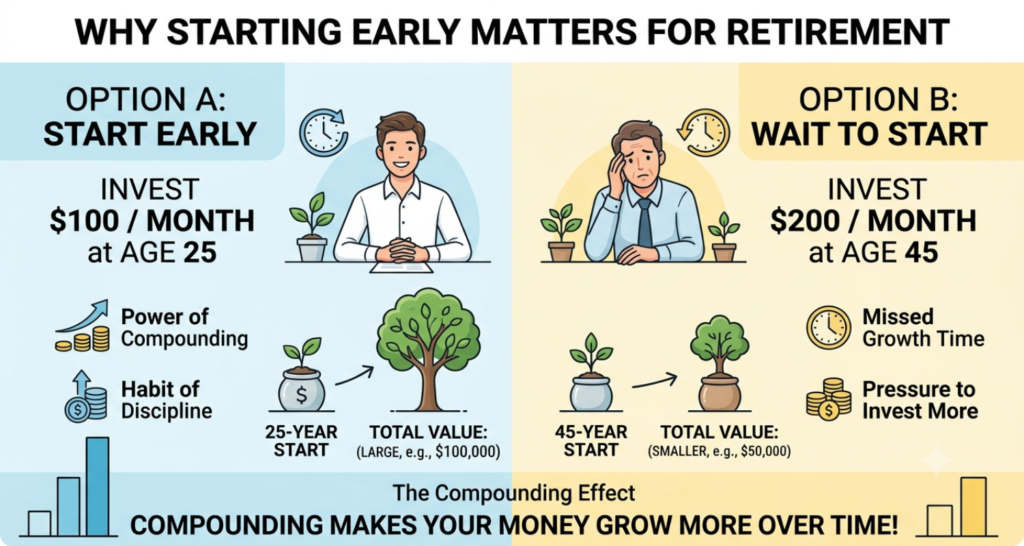
Retirement may seem decades away, especially if you’re in your 20s or 30s. However, waiting to save can be one of the biggest financial mistakes you make. The earlier you begin saving for retirement, the more time your money has to grow through the power of compound interest.
Many Americans believe they need a high income before they can start investing for retirement. In reality, consistency often matters more than the amount you invest. Even small monthly contributions can grow into a substantial retirement fund over time.
Whether you’re just starting your career or trying to catch up, understanding why starting retirement savings early matters can help you build financial security and reduce stress later in life.
Why Retirement Planning Should Start Early
Retirement planning is about giving your money enough time to work for you.
Every year you delay saving means fewer years for your investments to grow.
Although retirement may feel far away, time is one of the most valuable assets an investor has.
Therefore, starting early provides an advantage that cannot easily be replaced by investing larger amounts later. The Best Places to Keep Your Emergency Fund
The Power of Compound Growth
Compound growth is often called one of the most powerful principles in investing.
It allows your investment earnings to generate additional earnings over time.
For example:
Imagine two investors.
Investor A
- Starts investing at age 25
- Invests $300 per month
- Continues until retirement
Investor B
- Starts investing at age 40
- Invests the same monthly amount
- Retires at the same age
Even if both earn similar investment returns, Investor A may accumulate significantly more because the money has many more years to compound.
This is why time often matters more than trying to invest larger amounts later.
Small Contributions Can Make a Big Difference
Many people postpone retirement investing because they believe they cannot afford it.
Fortunately, that’s not true.
Starting with:
- $50 per month
- $100 per month
- $200 per month
is far better than waiting several years to invest larger amounts.
As your income grows, you can gradually increase your contributions.
The important step is simply getting started.
Employer Retirement Plans Can Boost Your Savings
Many employers offer retirement plans such as 401(k) accounts.
Some employers also match a portion of your contributions.
For example:
If you contribute 5% of your salary and your employer matches 5%, you’re essentially receiving additional retirement savings at no extra cost.
Failing to contribute enough to receive the full employer match means leaving valuable money behind.
Tax Advantages Help Your Investments Grow
Many retirement accounts provide tax benefits.
Depending on the account type, you may receive:
- Tax-deferred growth
- Tax-free qualified withdrawals
- Reduced taxable income
These tax advantages help your investments grow more efficiently over the long term.
Understanding your available retirement accounts can improve your overall financial strategy.
Starting Early Reduces Financial Pressure Later
Saving early allows you to spread your investments over many years.
Instead of making very large contributions close to retirement, you can invest smaller, manageable amounts consistently.
As a result, retirement planning becomes less stressful.
You’ll also have greater flexibility to handle unexpected financial challenges.
Inflation Makes Early Saving Even More Important
The cost of living generally rises over time.
Healthcare, housing, food, and transportation often become more expensive.
Because inflation reduces purchasing power, your retirement savings must continue growing throughout your working years.
Starting early gives your investments more time to outpace inflation.
Diversification Protects Long-Term Growth
Retirement investing is not about finding one winning investment.
Instead, successful investors usually diversify across different asset classes.
A diversified retirement portfolio may include:
- U.S. stocks
- International stocks
- Bonds
- Index funds
- Exchange-Traded Funds (ETFs)
- Real Estate Investment Trusts (REITs)
Diversification helps reduce risk while supporting long-term growth.
Common Reasons People Delay Retirement Savings
Many people postpone investing because they believe:
- They’re too young.
- They don’t earn enough.
- They’ll start next year.
- Retirement is too far away.
- They have other financial priorities.
Although these reasons are understandable, delaying retirement savings usually makes reaching future goals more difficult.
Starting with even a small contribution is often the better choice.
How Much Should You Save?
There is no single answer for everyone.
Your retirement savings depend on factors such as:
- Age
- Income
- Lifestyle goals
- Expected retirement age
- Existing savings
- Investment returns
Many financial professionals recommend saving between 10% and 15% of your income for retirement over the course of your career.
If that’s not possible today, begin with what you can afford and increase your savings over time.
Mistakes to Avoid
Building retirement wealth requires discipline.
Avoid these common mistakes.
Waiting for the “Perfect” Time
There is rarely a perfect moment to begin investing.
Starting now is usually better than waiting.
Cashing Out Retirement Accounts Early
Early withdrawals may reduce your long-term savings and could trigger taxes or penalties.
Whenever possible, leave retirement investments untouched until retirement.
Ignoring Employer Matching
Employer matching is one of the easiest ways to increase retirement savings.
Take full advantage if it’s available.
Investing Too Conservatively
Keeping all retirement savings in cash may reduce growth potential.
A balanced investment strategy often provides better long-term results.
Failing to Increase Contributions
As your salary grows, increase your retirement contributions whenever possible.
Even small annual increases can significantly boost your retirement fund.
What If You’re Starting Late?
If you’re beginning retirement savings later in life, don’t lose hope.
Although you have less time to invest, you can still improve your financial future by:
- Increasing monthly contributions.
- Reducing unnecessary spending.
- Taking advantage of employer matching.
- Investing consistently.
- Delaying retirement if appropriate.
- Reviewing your retirement plan annually.
Every contribution moves you closer to your goal.
Build Retirement Savings Into Your Budget
Treat retirement contributions like any other monthly expense.
Automating your investments offers several benefits:
- Consistency
- Reduced temptation to spend
- Long-term discipline
- Less emotional investing
Automatic contributions make retirement planning much easier.
Final Thoughts
Starting retirement savings early is one of the smartest financial decisions you can make. Time allows your investments to grow through compound returns, helping even modest contributions become meaningful wealth over the years.
You don’t need a perfect income or a large investment to begin. What matters most is developing the habit of saving consistently.
Whether you’re just entering the workforce or trying to improve your retirement plan, the best time to start was yesterday. The second-best time is today.
Your future self will thank you for every dollar you invest now.
U.S. Securities and Exchange Commission (SEC) – Saving and Investing
Frequently Asked Questions
Why is it better to start retirement savings early?
Starting early gives your investments more time to benefit from compound growth, allowing your money to grow significantly over the long term.
How much should I save for retirement each month?
The amount varies by income and goals, but many experts recommend saving 10% to 15% of your annual income over time.
Is it too late to start saving in my 40s or 50s?
No. While starting earlier provides more time for growth, consistent investing later in life can still build meaningful retirement savings.
What is the biggest advantage of employer retirement plans?
Many employers offer matching contributions, which can significantly increase your retirement savings.
Should I invest even if I can only afford a small amount?
Yes. Small, regular contributions made consistently are often more valuable than waiting until you can invest larger amounts.