 MOHAMMAD ABUBAKR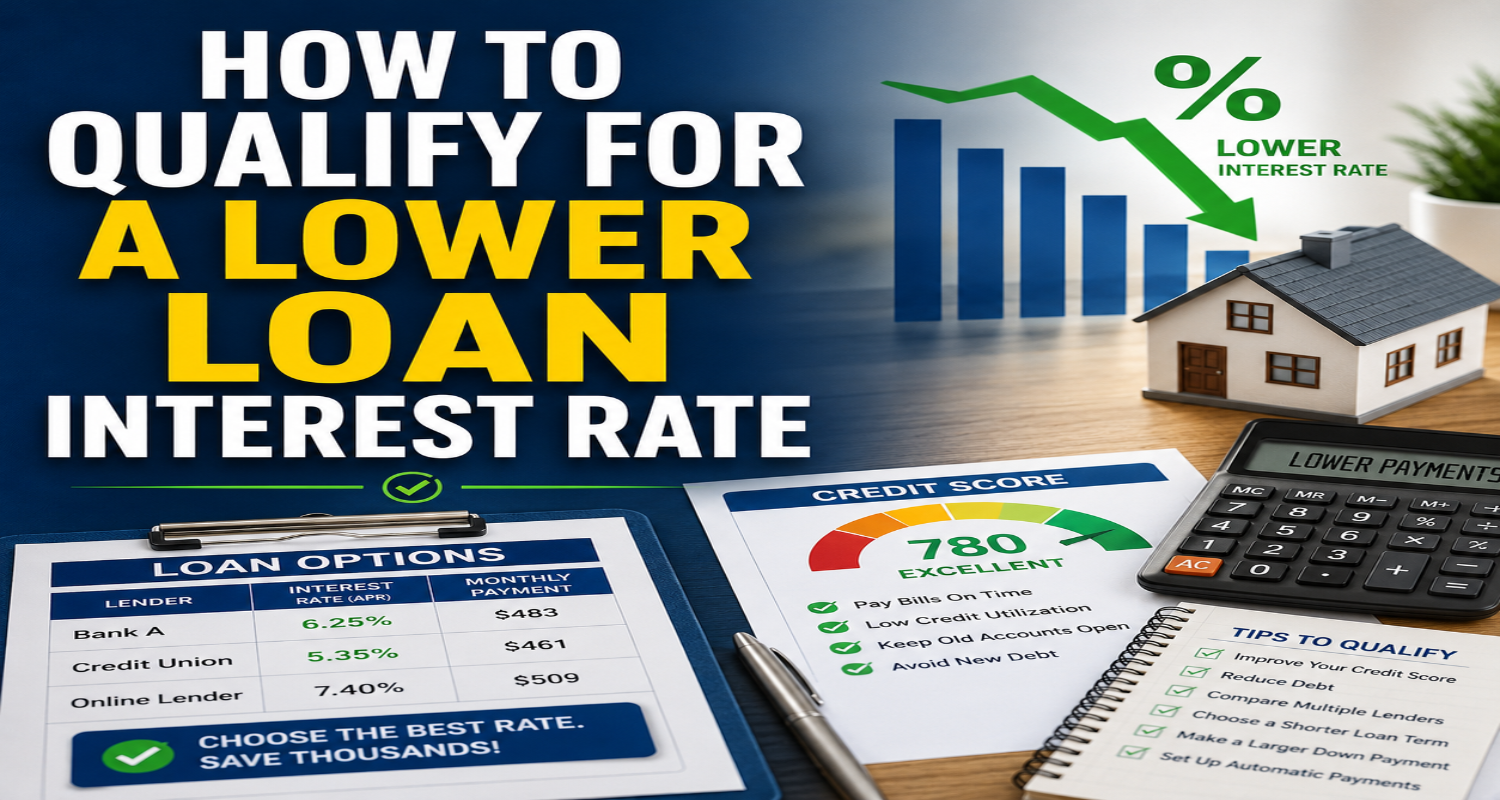
Getting approved for a loan is only part of the process. The interest rate you receive has a major impact on how much you repay over time. Even a small reduction in your loan interest rate can save you hundreds or even thousands of dollars.
Fortunately, lenders reward borrowers who show strong financial habits. By improving your credit profile and preparing before you apply, you can increase your chances of qualifying for a lower interest rate.
This guide explains the factors lenders consider and the practical steps you can take to secure the best loan terms.
Why Your Loan Interest Rate Matters
The interest rate determines the cost of borrowing money. A lower rate means:
- Lower monthly payments
- Less interest paid over the life of the loan
- More affordable borrowing
- Faster progress toward becoming debt-free
For example, a personal loan with a lower APR can significantly reduce your total repayment amount.
What Lenders Really Look at Before Approving You
Factors That Affect Your Loan Interest Rate
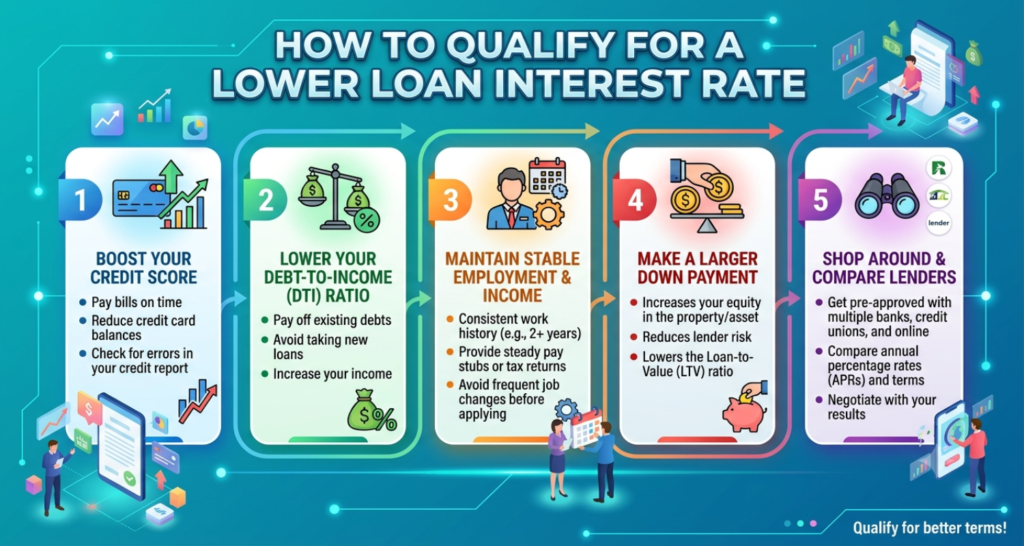
Lenders evaluate several factors before deciding your rate.
1. Credit Score
Your credit score is one of the most important factors.
Generally:
- Excellent (760+) – Lowest rates
- Good (700–759) – Competitive rates
- Fair (660–699) – Moderate rates
- Poor (Below 660) – Higher rates
Higher credit scores indicate lower lending risk.
2. Payment History
Late payments can negatively affect your loan offers.
Lenders prefer borrowers who consistently pay:
- Credit cards
- Auto loans
- Mortgages
- Utility bills
Making on-time payments builds trust with lenders.
3. Debt-to-Income (DTI) Ratio
Your debt-to-income ratio compares your monthly debt payments to your monthly income.
A lower DTI suggests you can comfortably manage additional debt.
Most lenders prefer a DTI below 36%, although requirements vary.
4. Income Stability
Steady employment and reliable income reassure lenders that you can repay the loan.
Frequent job changes or inconsistent income may lead to higher rates.
5. Loan Amount and Term
Borrowing a reasonable amount and choosing an appropriate repayment term can improve your chances of receiving a better rate.
Shorter loan terms often come with lower interest rates because they reduce lender risk.
Steps to Qualify for a Lower Loan Interest Rate
Improve Your Credit Score
Your credit score doesn’t improve overnight, but steady habits make a difference.
Focus on:
- Paying bills on time
- Reducing credit card balances
- Avoiding unnecessary new credit accounts
- Keeping old credit accounts open
- Monitoring your credit report for errors
Even a modest score increase can lead to better loan offers.
Lower Your Credit Utilization
Credit utilization measures how much of your available credit you’re using.
Experts generally recommend keeping utilization below 30%, and under 10% is even better.
Reducing balances before applying can improve your credit profile.
Pay Down Existing Debt
Lower debt reduces your debt-to-income ratio.
Prioritize paying off:
- Credit cards
- Personal loans
- High-interest balances
A lower DTI makes you a more attractive borrower.
Compare Multiple Lenders
Never accept the first offer you receive.
Compare:
- Banks
- Credit unions
- Online lenders
Shopping around helps you find better rates and loan terms.
Apply With a Co-Borrower
If your credit history is limited, applying with a qualified co-borrower may improve your approval chances and help you secure a lower interest rate.
Both applicants remain responsible for repaying the loan.
Choose Automatic Payments
Some lenders offer small interest rate discounts when you enroll in automatic payments.
Although the reduction may be modest, it can save money over the life of the loan.
Borrow Only What You Need
Lenders may view smaller, manageable loan requests more favorably than borrowing the maximum available amount.
Borrowing responsibly also reduces your long-term interest costs.
Avoid Multiple Loan Applications
Submitting many loan applications within a short period can temporarily affect your credit score.
Instead:
- Research lenders first
- Check for prequalification options
- Apply only when you’re ready
Common Mistakes That Increase Interest Rates
Avoid these costly mistakes:
- Missing payments
- Maxing out credit cards
- Applying for several loans at once
- Ignoring errors on your credit report
- Choosing the longest repayment term without comparing total costs
- Borrowing more than necessary
Avoiding these habits strengthens your financial profile.
Fixed vs. Variable Interest Rates
Before accepting a loan, understand the difference.
Fixed Rate
- Payment stays the same
- Easier budgeting
- Protection against rising rates
Variable Rate
- Rate can change over time
- Initial payments may be lower
- Monthly payments may increase if market rates rise
Choose the option that matches your financial goals and risk tolerance.
Should You Wait Before Applying?
If your credit score is improving or you’re close to paying off significant debt, waiting a few months before applying may help you qualify for a better rate.
However, if you need funds immediately, compare several lenders to find the most competitive offer available.
Frequently Asked Questions
What credit score is needed for the lowest loan rates?
While requirements vary, borrowers with scores above 760 generally receive the most competitive interest rates.
Does paying off credit cards help?
Yes. Lower balances can improve both your credit score and debt-to-income ratio.
Can I negotiate my loan interest rate?
Sometimes. Borrowers with strong credit and competing loan offers may be able to negotiate better terms.
Do credit unions offer lower rates?
In many cases, yes. Credit unions often provide competitive rates and lower fees compared to traditional banks.
Federal Trade Commission (FTC):
Final Thoughts
Qualifying for a lower loan interest rate requires preparation, but the savings can be substantial. Improving your credit score, reducing existing debt, maintaining steady income, and comparing multiple lenders all increase your chances of receiving the best possible loan offer.
Before signing any loan agreement, review the APR, repayment terms, and total borrowing cost—not just the monthly payment. Taking these steps can help you borrow confidently while keeping long-term costs under control.