 MOHAMMAD ABUBAKR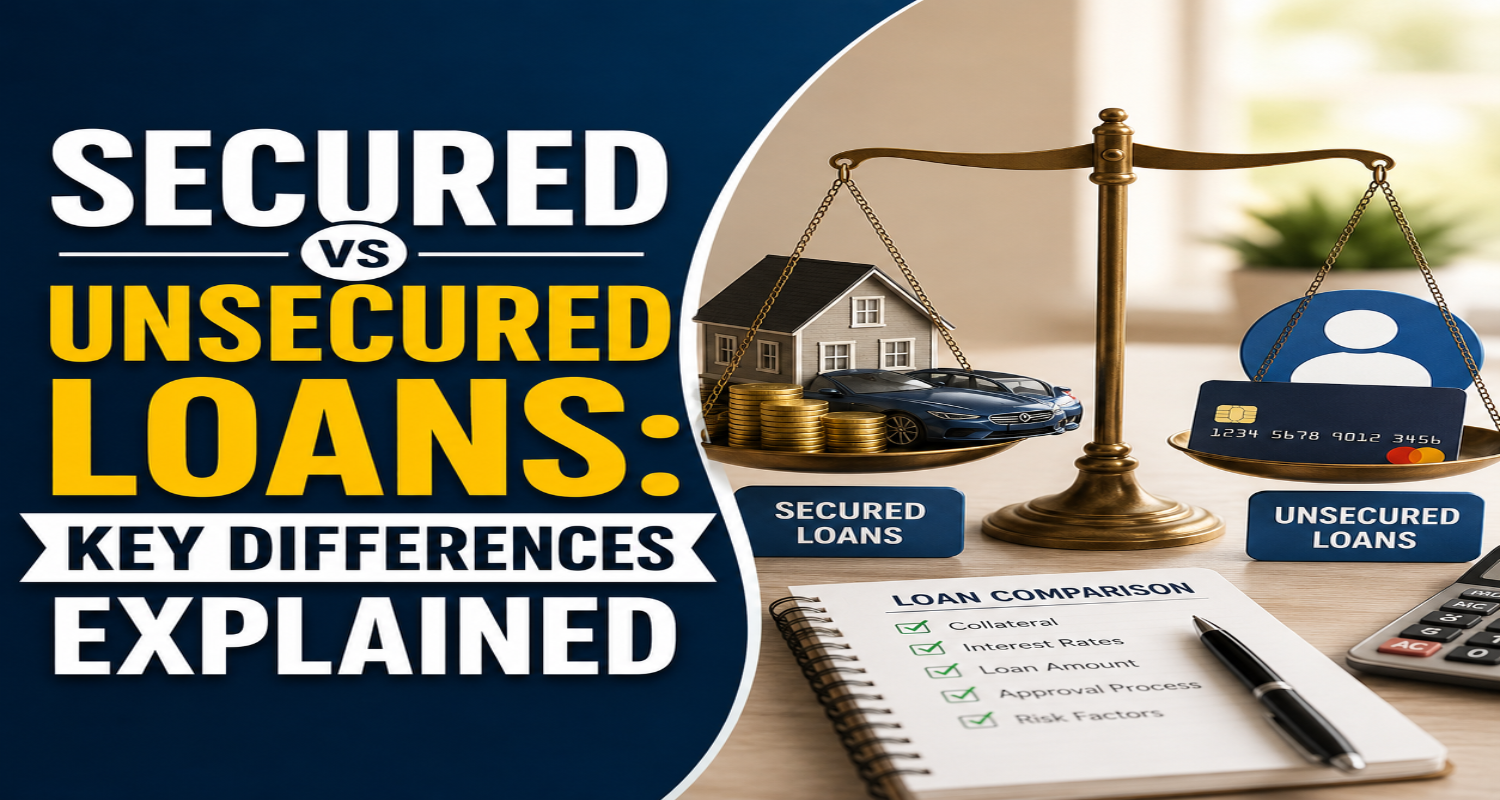
Choosing the right loan can save you money and reduce financial stress. However, many borrowers do not understand the difference between secured and unsecured loans. While both provide access to funds, they work in very different ways.
Understanding these differences helps you make smarter borrowing decisions. Whether you need money for a home, car, business, or emergency expense, knowing which loan fits your situation is essential.
This guide explains secured and unsecured loans, their advantages, disadvantages, and how to decide which option is right for you.
What Is a Secured Loan?
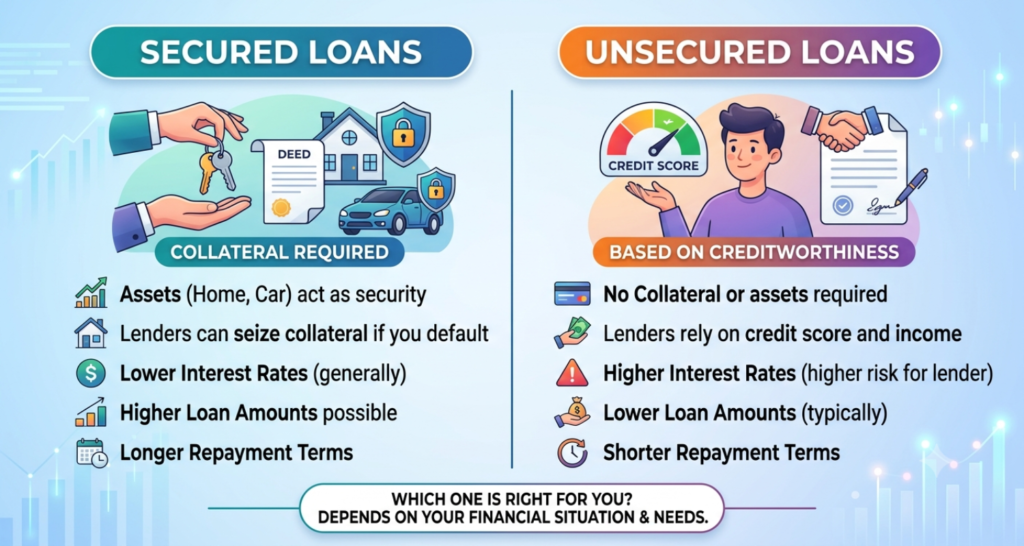
A secured loan is backed by collateral. Collateral is an asset that the lender can take if you fail to repay the loan.
Common forms of collateral include:
- A home
- A vehicle
- Savings account
- Investment account
- Business equipment
Because the lender has security, secured loans usually come with lower interest rates and higher borrowing limits.
Examples of Secured Loans
- Mortgage loans
- Auto loans
- Home equity loans
- Home equity lines of credit (HELOC)
- Secured personal loans
- Secured business loans
How Credit Utilization Can Make or Break Your Credit Score
What Is an Unsecured Loan?
An unsecured loan does not require collateral.
Instead, lenders approve the loan based on factors like:
- Credit score
- Income
- Employment history
- Existing debt
- Debt-to-income ratio
Since lenders take more risk, unsecured loans often have higher interest rates.
Examples of Unsecured Loans
- Personal loans
- Credit cards
- Student loans
- Medical loans
- Payday alternatives
- Debt consolidation loans
Secured vs Unsecured Loans: Quick Comparison
| Feature | Secured Loan | Unsecured Loan |
|---|---|---|
| Collateral Required | Yes | No |
| Interest Rate | Usually lower | Usually higher |
| Credit Score Requirement | Often more flexible | Usually stricter |
| Loan Amount | Higher | Lower |
| Approval Speed | Moderate | Faster |
| Risk to Borrower | Asset can be lost | No collateral loss |
| Risk to Lender | Lower | Higher |
How Secured Loans Work
When you apply for a secured loan, the lender evaluates both your finances and the value of your collateral.
If approved:
- The lender places a lien on the asset.
- You receive the loan funds.
- You make monthly payments.
- Once paid off, the lien is removed.
However, if you default, the lender may repossess or foreclose on the collateral.
How Unsecured Loans Work
With unsecured loans, lenders rely heavily on your financial history.
They review:
- Credit reports
- Credit score
- Income
- Employment
- Existing debt
If approved, you receive the money without pledging property.
If you fail to repay, the lender cannot immediately seize assets. Instead, they may:
- Charge late fees
- Report missed payments
- Send the account to collections
- File a lawsuit in severe cases
Advantages of Secured Loans
Lower Interest Rates
Collateral reduces lender risk. Therefore, borrowers often receive lower annual percentage rates (APRs).
Higher Loan Limits
Since the loan is backed by an asset, lenders are often willing to lend larger amounts.
Easier Approval
Borrowers with average or fair credit may still qualify.
Longer Repayment Terms
Many secured loans offer repayment periods extending from several years to decades.
Disadvantages of Secured Loans
Risk of Losing Your Property
This is the biggest drawback.
Missing payments could result in:
- Vehicle repossession
- Home foreclosure
- Loss of savings pledged as collateral
Longer Approval Process
Property appraisals and documentation often increase approval time.
More Paperwork
Secured loans usually require additional verification.
Advantages of Unsecured Loans
No Collateral Required
You do not risk losing your home or car.
Faster Approval
Many online lenders approve applications within one business day.
Flexible Usage
Personal loans can often be used for:
- Home improvements
- Medical expenses
- Vacations
- Weddings
- Emergency repairs
- Debt consolidation
Disadvantages of Unsecured Loans
Higher Interest Rates
Without collateral, lenders charge higher rates to offset risk.
Lower Borrowing Limits
Loan amounts are generally smaller.
Higher Credit Standards
Applicants with poor credit may struggle to qualify or may receive expensive loan offers.
Which Loan Costs Less?
In most situations, secured loans cost less over time.
For example:
| Loan Type | Estimated APR Range |
|---|---|
| Mortgage | 6%–8% |
| Auto Loan | 5%–9% |
| Home Equity Loan | 7%–10% |
| Personal Loan | 8%–36% |
| Credit Card | 18%–30% |
Actual rates depend on:
- Credit score
- Income
- Loan amount
- Loan term
- Market conditions
Who Should Choose a Secured Loan?
A secured loan may be the better choice if you:
- Need a large loan
- Want lower monthly payments
- Have valuable collateral
- Plan to finance a home or vehicle
- Want the lowest available interest rate
Who Should Choose an Unsecured Loan?
An unsecured loan may fit your needs if you:
- Need money quickly
- Do not own valuable assets
- Want to avoid risking property
- Need a smaller loan
- Have good or excellent credit
Can You Improve Your Loan Approval Chances?
Yes. Lenders look for responsible borrowers.
Improve your chances by:
- Paying bills on time
- Lowering credit card balances
- Avoiding unnecessary debt
- Maintaining stable employment
- Checking your credit report for errors
- Comparing multiple lenders before applying
These habits may also help you qualify for lower interest rates.
Common Mistakes to Avoid
Many borrowers make avoidable mistakes.
Avoid these common errors:
- Borrowing more than necessary
- Ignoring the total loan cost
- Choosing the longest repayment term without comparing costs
- Missing monthly payments
- Accepting the first loan offer
- Forgetting to read loan fees and penalties
Taking time to compare offers can save thousands of dollars.
Frequently Asked Questions
Is a mortgage a secured loan?
Yes. The home serves as collateral.
Are credit cards unsecured loans?
Yes. Most credit cards are unsecured revolving credit accounts.
Can I lose my home with an unsecured loan?
Generally, no. However, if a lender wins a court judgment against you, legal remedies may vary depending on state laws.
Which loan is easier to get?
Borrowers with lower credit scores often find secured loans easier to obtain because collateral reduces lender risk.
Which loan has lower interest rates?
Secured loans usually offer lower rates than unsecured loans.
Consumer Financial Protection Bureau (CFPB):
Final Thoughts
Understanding secured vs unsecured loans helps you borrow wisely. Secured loans often provide lower interest rates and larger borrowing limits, but they require collateral. Unsecured loans offer greater flexibility and faster approval, though they generally cost more.
Before borrowing, compare loan offers, calculate the total repayment cost, and choose the option that fits your financial goals. Responsible borrowing today can strengthen your financial future and reduce unnecessary debt tomorrow.