 MOHAMMAD ABUBAKR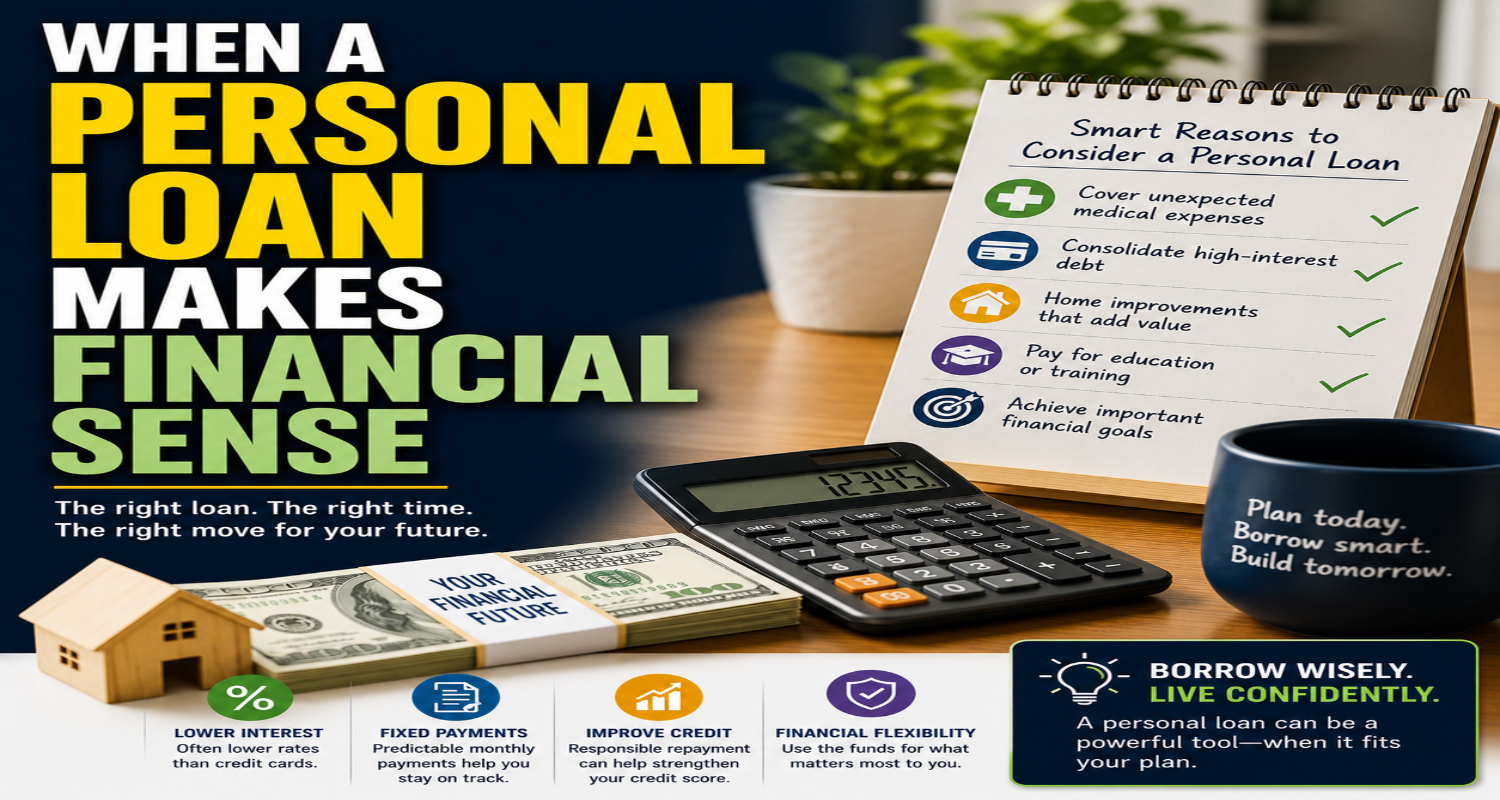
Personal loans can be a valuable financial tool when used wisely. They offer flexible funding for many expenses, from consolidating debt to covering emergency costs. However, borrowing money is not always the right solution. Understanding when a personal loan makes financial sense for your financial goals can help you avoid unnecessary debt and make smarter financial decisions.
Many people apply for personal loans without fully comparing costs or considering alternatives. As a result, they may pay higher interest or borrow more than they truly need. On the other hand, when used responsibly, a personal loan can simplify finances, reduce borrowing costs, and even improve financial stability.
This guide explains the situations where a personal loan makes sense, when you should avoid one, and how to determine if it’s the right choice for your needs.
What Is a Personal Loan?
A personal loan is a lump sum of money borrowed from a bank, credit union, or online lender. You repay the loan in fixed monthly installments over a set period, usually between two and seven years.
Unlike mortgages or auto loans, most personal loans are unsecured. This means you usually don’t need to provide collateral.
Common uses include:
- Debt consolidation
- Home improvements
- Medical expenses
- Emergency costs
- Major purchases
- Wedding expenses
- Moving costs
- Vacation financing (although this is generally less recommended)
What Lenders Look for Before Approving a Loan
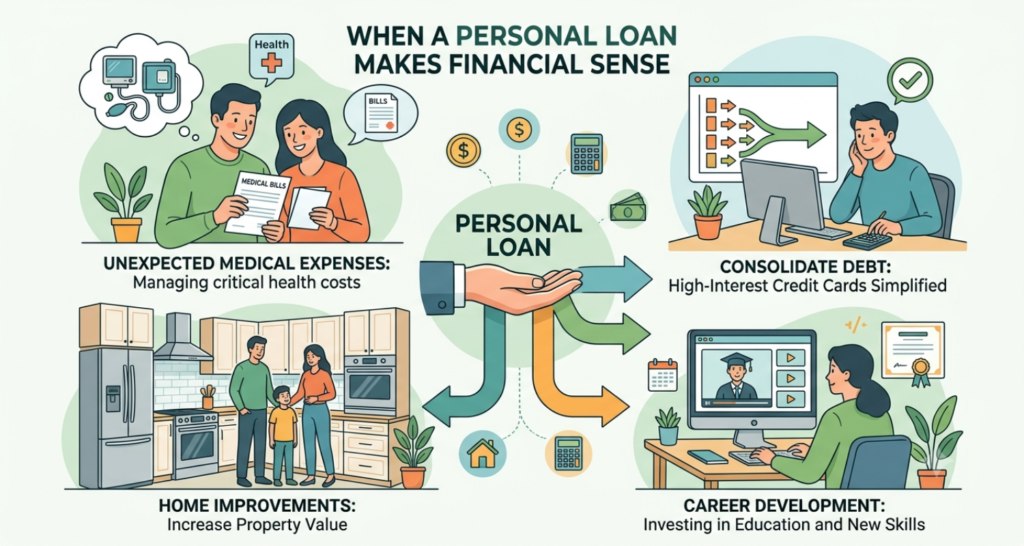
When a Personal Loan Makes Financial Sense
1. You Want to Consolidate High-Interest Debt
One of the best reasons to take a personal loan is debt consolidation.
If you have several credit cards with high interest rates, replacing them with one lower-rate personal loan may help you:
- Lower interest costs
- Simplify monthly payments
- Pay off debt faster
- Improve budgeting
However, avoid running up new credit card balances after consolidation.
2. You Need to Cover Emergency Expenses
Unexpected emergencies happen.
Examples include:
- Medical bills
- Emergency travel
- Urgent home repairs
- Vehicle repairs
If you don’t have enough emergency savings, a personal loan may cost less than relying on high-interest credit cards.
Still, compare loan costs before borrowing.
3. You’re Financing Home Improvements
Some home improvements increase your property’s value.
Examples include:
- Roof replacement
- HVAC installation
- Kitchen remodeling
- Bathroom upgrades
- Energy-efficient improvements
If the project fits your budget, a personal loan may provide predictable monthly payments without using your home’s equity.
4. You Can Qualify for a Low Interest Rate
Borrowers with strong credit often receive competitive interest rates.
Lower rates reduce the overall cost of borrowing.
Before accepting an offer, compare lenders to find the best terms available.
5. You Need Predictable Monthly Payments
Personal loans usually have fixed interest rates.
This means:
- Fixed monthly payment
- Fixed payoff date
- Easier budgeting
- No surprise payment increases
Many borrowers appreciate this consistency.
6. You Have a Clear Repayment Plan
Borrowing only makes financial sense if you can comfortably repay the loan.
Before applying, ask yourself:
- Can I afford the monthly payment?
- Do I have stable income?
- Will this loan improve my financial situation?
If the answer is yes, a personal loan may be appropriate.
Situations Where a Personal Loan May Not Make Sense
Personal loans aren’t always the best option.
Consider avoiding one if:
You’re Borrowing for Luxury Spending
Using loans for vacations, expensive electronics, or luxury shopping can create unnecessary debt.
You Already Have High Debt
Adding another loan may increase financial pressure if your debt-to-income ratio is already high.
You Can’t Afford the Monthly Payment
Missing payments can damage your credit score and lead to additional fees.
You Qualify Only for Very High Interest Rates
Poor credit may result in expensive loan offers.
In some cases, improving your credit first may save money.
Benefits of Personal Loans
When used responsibly, personal loans offer several advantages.
Fast Access to Funds
Many lenders approve applications within one business day.
Fixed Interest Rates
Most personal loans offer stable repayment schedules.
Flexible Use
Funds may be used for many legitimate financial needs.
Potential Credit Score Improvement
Making on-time payments can strengthen your payment history.
Reducing credit card balances may also lower your credit utilization ratio.
Potential Drawbacks
Before borrowing, consider the disadvantages.
- Interest charges
- Origination fees
- Late payment penalties
- Risk of unnecessary borrowing
- Higher total costs if choosing long repayment terms
Understanding the full loan cost is essential.
How to Decide If a Personal Loan Is Right
Ask yourself these questions:
- Is the expense necessary?
- Will the loan improve my finances?
- Can I comfortably make payments?
- Have I compared multiple lenders?
- Is the interest rate reasonable?
- Do I understand all fees?
If you answer “yes” to these questions, borrowing may be a smart financial decision.
Tips Before Applying
Increase your chances of getting favorable terms by preparing ahead.
Check Your Credit Score
A higher score often leads to lower interest rates.
Compare Multiple Lenders
Never accept the first loan offer without comparing alternatives.
Borrow Only What You Need
Avoid borrowing extra money simply because you qualify.
Read the Loan Agreement
Review:
- Interest rate
- APR
- Repayment term
- Fees
- Prepayment penalties (if any)
Build a Repayment Budget
Include the monthly payment in your budget before signing the loan agreement.
Common Mistakes to Avoid
Many borrowers make avoidable errors.
Don’t:
- Borrow without comparing rates
- Ignore loan fees
- Miss monthly payments
- Borrow more than necessary
- Use loans for unnecessary purchases
- Apply with multiple lenders at the same time without research
Alternatives to Personal Loans
Depending on your needs, consider other options.
- Emergency savings
- 0% APR balance transfer credit cards
- Home equity loans (for homeowners)
- Home equity lines of credit (HELOCs)
- Family loans (with clear agreements)
- Payment plans offered by service providers
Each option has benefits and risks.
Final Thoughts
Knowing when a personal loan makes financial sense for your financial goals helps you borrow with confidence. Personal loans can be an excellent solution for consolidating high-interest debt, covering emergency expenses, financing important home improvements, or managing major life events. Their predictable monthly payments and fixed repayment schedules make budgeting easier for many borrowers.
However, borrowing should always support your long-term financial well-being rather than create additional stress. Compare lenders, understand the total borrowing cost, and borrow only what you truly need. By making informed decisions and repaying your loan responsibly, you can use a personal loan as a practical tool to strengthen your financial future instead of becoming trapped in unnecessary debt.
Consumer Financial Protection Bureau (CFPB):
Frequently Asked Questions (FAQs)
When is a personal loan a good idea?
A personal loan is often a good choice for debt consolidation, emergency expenses, home improvements, or other necessary costs when you can afford the payments.
Does a personal loan hurt your credit score?
Applying may cause a small temporary drop due to a hard inquiry. However, making on-time payments can improve your credit over time.
Is a personal loan better than a credit card?
For large expenses, a personal loan may offer lower interest rates and fixed monthly payments compared to many credit cards.
Can I pay off a personal loan early?
Many lenders allow early repayment, but always check for prepayment penalties before signing the loan agreement.
What credit score is needed for a personal loan?
Many lenders prefer a score of 670 or higher, although approval depends on income, debt, and overall financial history.