 MOHAMMAD ABUBAKR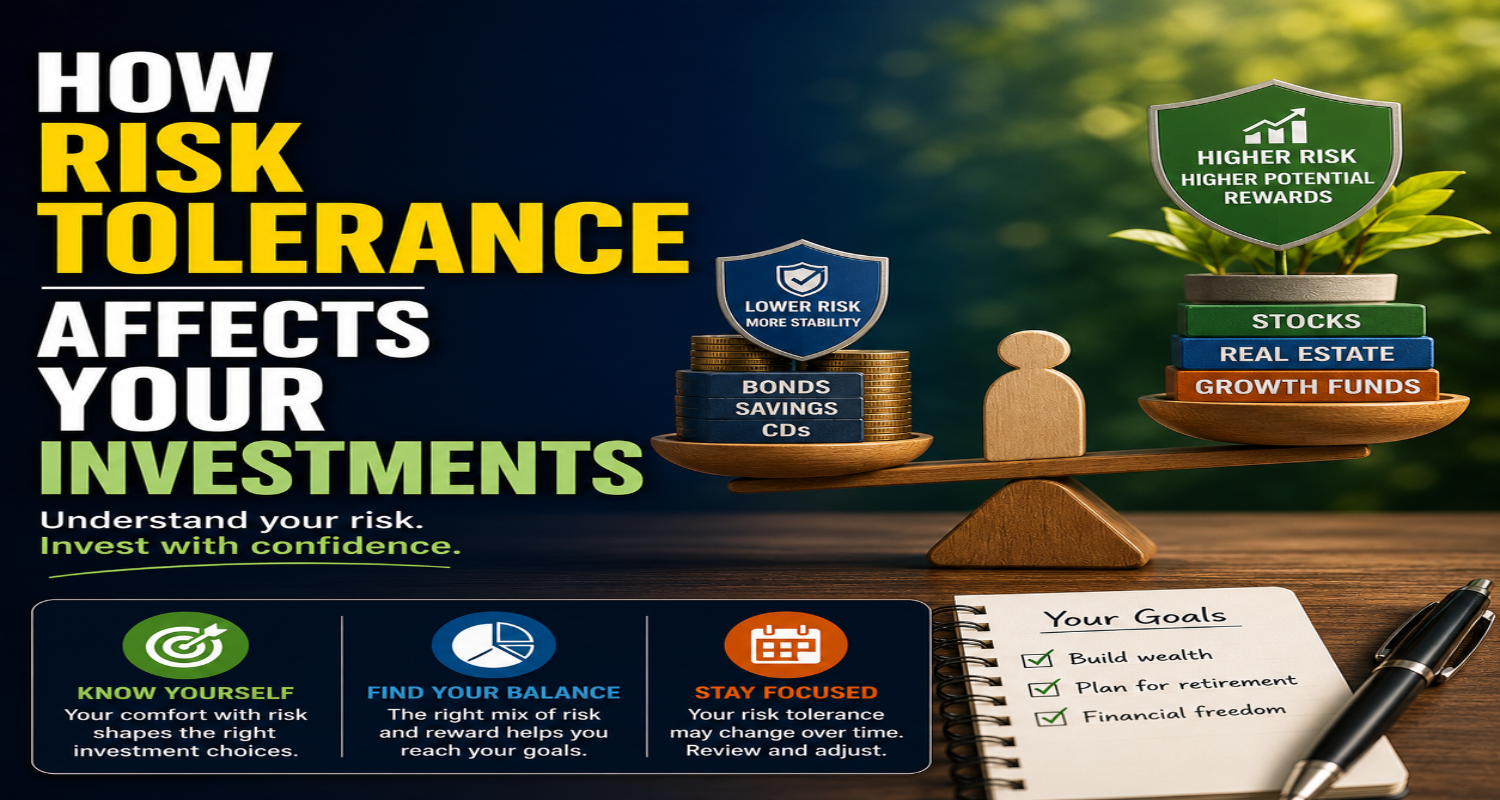
Every investment involves some level of risk. While some investments offer steady but modest returns, others have the potential for higher gains along with greater losses. Understanding how risk tolerance affects your investment decisions and returns is one of the most important steps toward building a successful investment strategy.
Many new investors focus only on potential profits. However, they often overlook how much market volatility they can comfortably handle. Choosing investments that don’t match your risk tolerance can lead to emotional decisions, poor timing, and unnecessary losses.
This guide explains what risk tolerance is, why it matters, the factors that influence it, and how to build an investment portfolio that aligns with your financial goals.
What Is Risk Tolerance?
Risk tolerance is your ability and willingness to accept fluctuations in the value of your investments.
Some investors remain calm during market downturns, while others become uncomfortable when their portfolio loses value. Your comfort level with these ups and downs helps determine the types of investments that are right for you.
Risk tolerance is not about avoiding risk completely. Instead, it’s about finding a level of risk that matches your financial situation and personal comfort.
Emergency Fund vs Investing: Which Comes First?
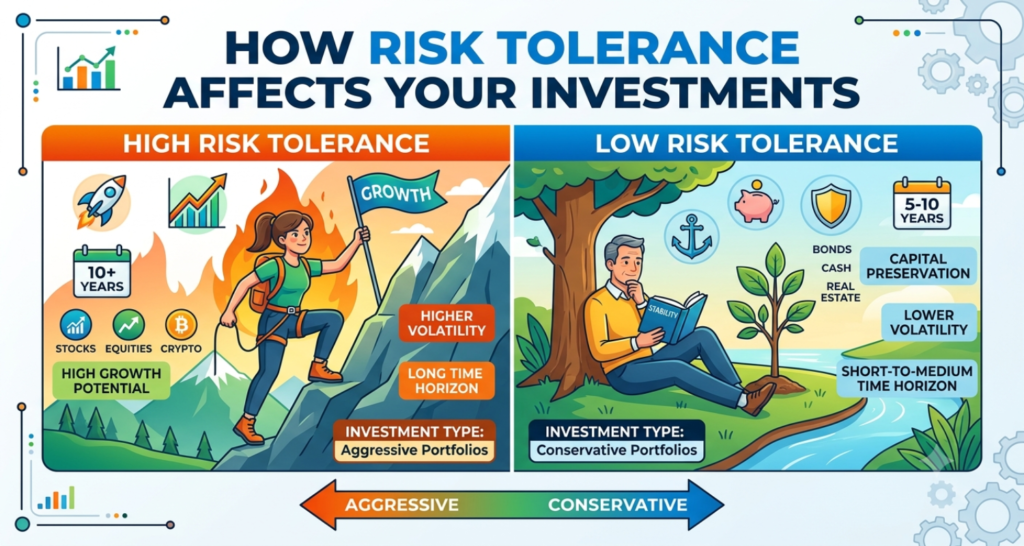
Why Risk Tolerance Affects Your Investment Decisions
Your risk tolerance influences nearly every investment decision you make.
It affects:
- Asset allocation
- Investment choices
- Portfolio diversification
- Expected returns
- Emotional responses during market declines
When your portfolio matches your risk tolerance, you’re more likely to stay invested during periods of market volatility.
Types of Investment Risk Tolerance
Most investors fall into one of three categories.
1. Conservative
Conservative investors prioritize protecting their money over earning high returns.
Typical investments include:
- High-yield savings accounts
- Certificates of Deposit (CDs)
- Treasury securities
- High-quality bonds
These investments generally offer lower returns but also lower risk.
2. Moderate
Moderate investors seek a balance between growth and stability.
Their portfolios often include a mix of:
- Stocks
- Bonds
- Mutual funds
- Exchange-Traded Funds (ETFs)
This diversified approach aims to reduce risk while pursuing long-term growth.
3. Aggressive
Aggressive investors are comfortable accepting larger market swings in exchange for higher growth potential.
Their portfolios may contain:
- Growth stocks
- Small-cap stocks
- International stocks
- Sector-specific funds
- Emerging market investments
Although returns can be higher, losses can also be greater during market downturns.
Factors That Affect Your Investment Risk Tolerance
Several personal and financial factors shape your risk tolerance.
Age
Younger investors often have more time to recover from market declines.
Therefore, they may be more comfortable taking additional investment risk.
Financial Goals
Your investment objective matters.
For example:
- Retirement savings
- Buying a home
- College education
- Wealth building
Long-term goals generally allow for greater investment risk than short-term goals.
Investment Time Horizon
The amount of time before you’ll need your money affects your risk tolerance.
A longer investment horizon often supports a higher allocation to stocks because there is more time to recover from temporary market declines.
Income Stability
Reliable income may allow investors to tolerate more market volatility.
Individuals with unstable income may prefer more conservative investments.
Emergency Savings
A strong emergency fund can reduce the need to sell investments during difficult financial periods.
This often allows investors to remain focused on long-term goals.
Personal Comfort Level
Two investors with identical finances may have very different emotional responses to market volatility.
Your comfort with temporary losses is an important part of determining your risk tolerance.
Risk Tolerance vs Risk Capacity in Investing
These terms are often confused, but they are different.
Risk tolerance refers to your emotional comfort with investment risk.
Risk capacity refers to your financial ability to withstand losses.
An investor may feel comfortable taking risks but lack the financial resources to recover from major losses.
Both should be considered when building an investment portfolio.
How Risk Tolerance Affects Your Investment Portfolio
Your risk tolerance influences your asset allocation.
Conservative Portfolio
May emphasize:
- Bonds
- CDs
- Treasury securities
- Cash equivalents
The goal is preserving capital while generating modest income.
Moderate Portfolio
Typically includes a balanced mix of:
- Stocks
- Bonds
- ETFs
- Mutual funds
This approach seeks both growth and stability.
Aggressive Portfolio
May focus primarily on:
- U.S. stocks
- International stocks
- Growth funds
- Emerging markets
These investments aim for higher long-term returns but experience greater short-term volatility.
Benefits of Matching Investments to Your Risk Tolerance
Choosing investments that fit your comfort level provides several advantages.
Better Emotional Control
You’re less likely to panic during market declines.
Improved Long-Term Discipline
Investors who stay invested often achieve better long-term results than those who frequently buy and sell based on emotions.
More Consistent Financial Planning
Appropriate risk levels support realistic financial goals.
Reduced Stress
Knowing your portfolio matches your comfort level can improve confidence during market fluctuations.
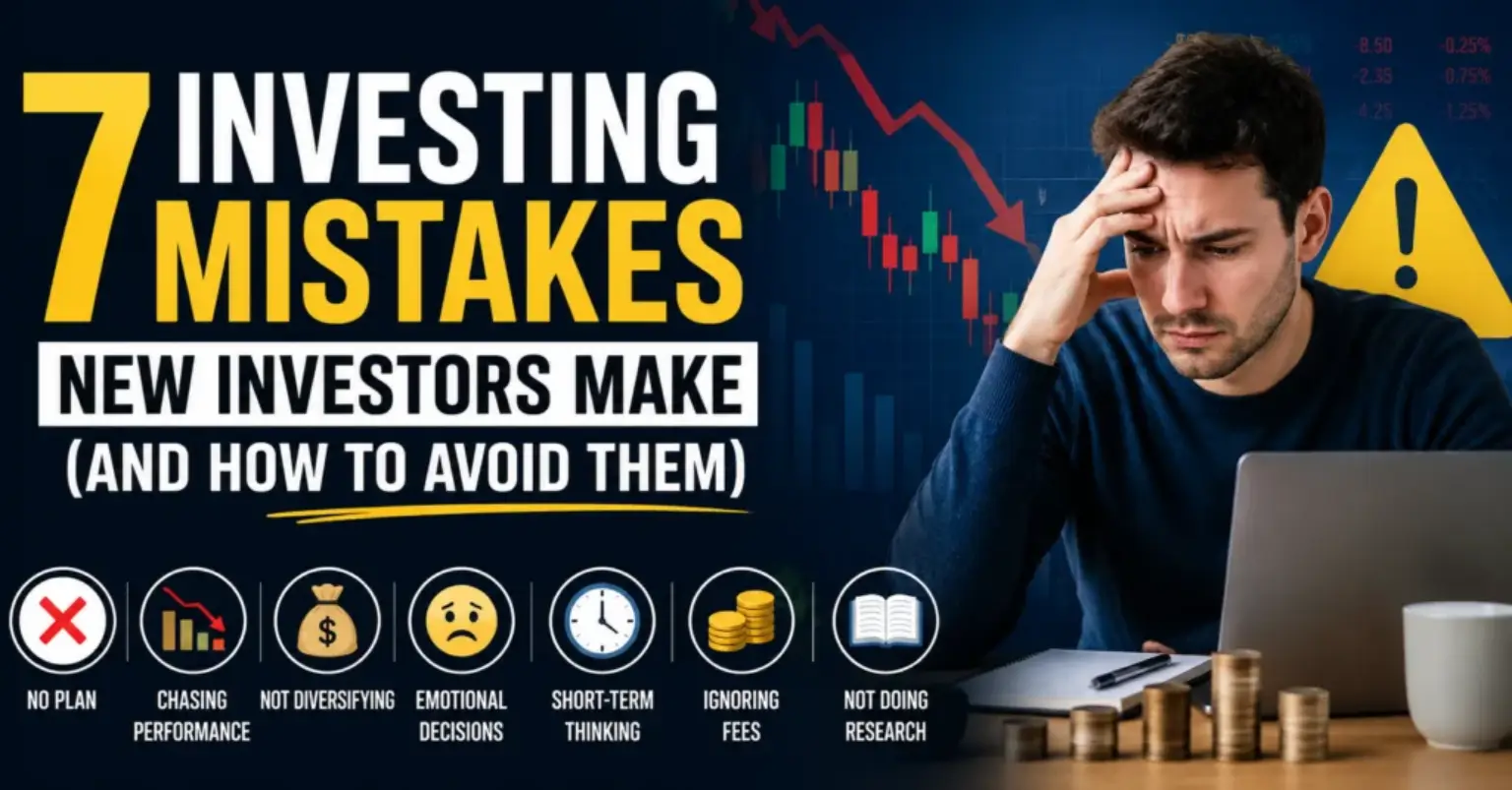
Common Investing Mistakes
Many investors ignore their true risk tolerance.
Avoid these common mistakes.
Chasing High Returns
Higher returns usually involve greater risk.
Never invest solely based on recent performance.
Selling During Market Declines
Temporary market losses are a normal part of investing.
Selling during downturns may lock in losses.
Ignoring Diversification
Diversification spreads investments across different asset classes and may reduce overall portfolio risk.
Following Friends or Social Media
Your financial goals are unique.
Choose investments based on your own circumstances rather than someone else’s success stories.
How to Determine Your Risk Tolerance
Ask yourself these questions.
- How would I react if my portfolio lost 20% in one year?
- How soon will I need this money?
- Do I have emergency savings?
- Can I afford temporary losses?
- Am I investing for long-term growth or short-term needs?
Your answers can help guide your investment decisions.
Tips for Managing Investment Risk Based on Your Risk Tolerance
You can’t eliminate investment risk completely, but you can manage it effectively.
Diversify Your Portfolio
Spread investments across multiple asset classes.
Invest for the Long Term
Long-term investing often reduces the impact of short-term market volatility.
Review Your Portfolio Regularly
Your financial goals and risk tolerance may change over time.
Review your investments periodically to ensure they still align with your needs.
Avoid Emotional Decisions
Market declines can be uncomfortable.
Sticking to your investment plan often produces better long-term results than reacting to short-term headlines.
Final Thoughts
Understanding how risk tolerance affects your investment decisions and returns is essential for building a portfolio you can confidently maintain through changing market conditions. Your risk tolerance influences the investments you choose, the level of volatility you can accept, and your ability to stay committed to your long-term financial goals.
Rather than chasing the highest returns, focus on creating a diversified portfolio that matches both your financial circumstances and your comfort with risk. By investing consistently, reviewing your portfolio regularly, and avoiding emotional decisions, you’ll be better positioned to achieve long-term financial success.
Frequently Asked Questions (FAQs)
What is risk tolerance?
Risk tolerance is your willingness and ability to accept fluctuations in the value of your investments.
Why is risk tolerance important?
It helps determine the right investment strategy, asset allocation, and portfolio balance based on your financial goals and comfort level.
Can my risk tolerance change?
Yes. Your risk tolerance may change as your income, age, financial goals, or life circumstances evolve.
Is higher risk always better?
No. Higher-risk investments may offer greater return potential, but they also increase the possibility of significant losses.
How often should I review my investment strategy?
Review your portfolio at least once a year or whenever major life or financial changes occur.