 MOHAMMAD ABUBAKR
Owning a home comes with many financial responsibilities. While most buyers focus on mortgage payments, insurance, and maintenance costs, property taxes are another major expense that can increase over time. Across the United States, many homeowners have experienced rising property taxes due to increasing home values, local government spending, and changing tax policies.
Higher property taxes can affect your monthly budget, long-term financial planning, and even your decision to stay in your current home. Therefore, understanding why property taxes rise and how they impact homeowners is essential.
In this guide, you’ll learn what causes property taxes to increase, how they affect your finances, and practical strategies to manage higher tax bills.
What Are Property Taxes?
Property taxes are annual taxes paid by homeowners to local governments. These taxes help fund essential public services, including:
- Public schools
- Police and fire departments
- Road maintenance
- Parks and recreation
- Libraries
- Local infrastructure
The amount you owe depends primarily on two factors:
- The assessed value of your property
- Your local property tax rate
As either of these increases, your property tax bill typically rises.
What Is a Brokerage Account? Beginner’s Guide for Investors
Why Are Property Taxes Rising?
Several factors contribute to increasing property taxes.
1. Rising Home Values
One of the biggest reasons is increasing home prices.
When your home’s market value rises, your local assessor may increase its assessed value. Even if the tax rate remains the same, you’ll likely pay more taxes.
For example:
- Home value in 2021: $300,000
- New assessed value: $380,000
Without any change in the tax rate, your annual property tax bill increases significantly.
2. Local Government Spending
Cities and counties often require additional funding for:
- New schools
- Public transportation
- Emergency services
- Infrastructure improvements
When budgets increase, local governments may raise property tax rates.
3. Population Growth
Growing communities often need:
- More schools
- Better roads
- Additional utilities
- Expanded emergency services
These improvements are commonly funded through higher property taxes.
4. Inflation
Inflation increases the cost of:
- Construction
- Government salaries
- Equipment
- Public projects
As expenses rise, municipalities may collect more revenue through property taxes.
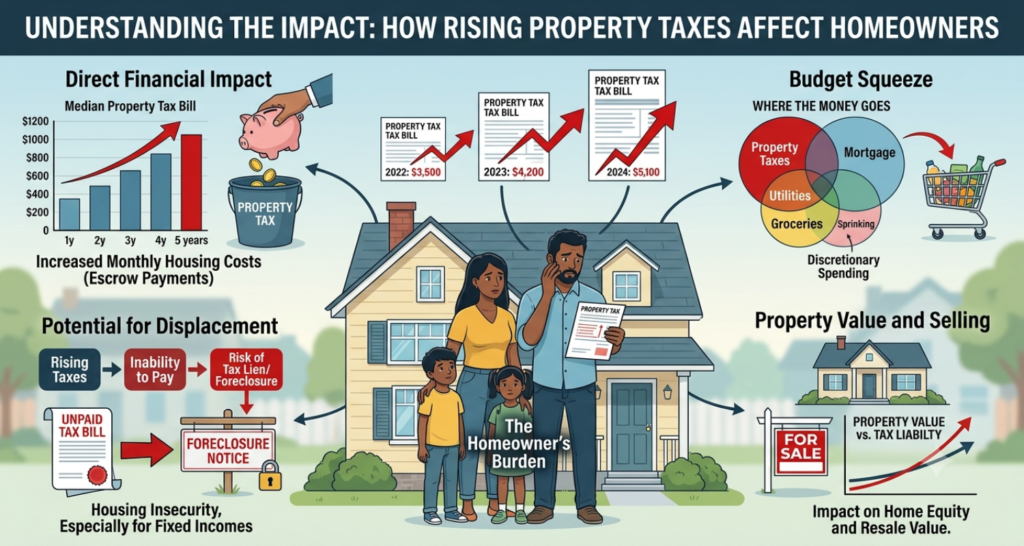
How Rising Property Taxes Affect Homeowners
Higher property taxes impact homeowners in several important ways.
Increased Monthly Housing Costs
Many homeowners pay property taxes through their mortgage escrow account.
When taxes rise:
- Monthly mortgage payments increase
- Housing becomes more expensive
- Household budgets become tighter
Even if your mortgage interest rate never changes, your total monthly payment can still increase.
Reduced Disposable Income
Money spent on higher property taxes cannot be used elsewhere.
Families may have less money available for:
- Retirement savings
- Emergency funds
- Vacations
- Home improvements
- Investments
Over time, these missed financial opportunities can slow wealth building.
Financial Pressure for Retirees
Retirees living on fixed incomes often feel the greatest impact.
Although they may own their homes outright, increasing property taxes continue every year.
Without proper planning, rising taxes can strain retirement budgets.
Higher Cost of Homeownership
Property taxes are a permanent ownership expense.
Unlike a mortgage, property taxes never disappear while you own the property.
This makes long-term housing costs less predictable.
Difficulty Affording Larger Homes
As property taxes increase, larger or more expensive homes become increasingly costly to maintain.
Some homeowners choose to:
- Downsize
- Relocate
- Sell their homes
Simply because ongoing tax expenses become difficult to manage.
Can Rising Property Taxes Affect Home Values?
Yes.
High property taxes may discourage some buyers.
If two similar homes are available, buyers often prefer the one with lower annual taxes.
As a result:
- Homes with very high property taxes may attract fewer buyers.
- Some buyers qualify for smaller mortgages because taxes increase their monthly housing costs.
- Higher taxes can slow demand in certain neighborhoods.
However, desirable locations with excellent schools and public services may still maintain strong home values despite higher taxes.
How Property Taxes Affect Mortgage Payments
Most lenders collect property taxes through escrow accounts.
If your annual property taxes increase:
- Your escrow payment increases.
- Your monthly mortgage payment increases.
- Your lender may adjust your payment after an annual escrow review.
Many homeowners are surprised when their mortgage payment rises even though their interest rate remains unchanged.
Who Is Most Affected?
Certain homeowners experience greater financial pressure.
First-Time Buyers
New buyers often underestimate future tax increases.
They budget based on current taxes, not future reassessments.
Seniors
Retirees living on pensions or Social Security have limited income growth.
Rising taxes can reduce financial flexibility.
Families in Rapidly Growing Areas
Communities experiencing strong housing demand often see property values increase rapidly.
This usually leads to higher tax assessments.
Owners of Investment Properties
Higher property taxes reduce rental property profits.
Some landlords increase rent to offset these additional expenses.
Ways to Reduce Your Property Tax Burden
Although you cannot completely avoid property taxes, you may be able to lower them.
Review Your Property Assessment
Mistakes happen.
Check whether:
- Square footage is correct
- Lot size is accurate
- Home improvements are listed properly
Errors may lead to overpayment.
Appeal Your Assessment
If you believe your home was overvalued, you can appeal.
You’ll typically need:
- Comparable home sales
- Independent appraisal
- Supporting documentation
Many homeowners successfully reduce their tax bills through appeals.
Apply for Available Exemptions
Many states offer exemptions for:
- Seniors
- Veterans
- Disabled homeowners
- Primary residences (Homestead Exemption)
These programs can lower taxable value.
Budget for Annual Increases
Rather than assuming taxes remain constant, include yearly increases in your long-term financial plan.
Even small annual increases add up over time.
Monitor Local Tax Changes
Attend community meetings or review local government budgets.
Understanding upcoming tax proposals helps you prepare before increases occur.
How Buyers Should Plan for Rising Property Taxes
Before purchasing a home:
- Research local property tax rates.
- Review recent tax history.
- Estimate future increases.
- Calculate total monthly ownership costs.
- Include taxes when determining affordability.
A lower-priced home with higher taxes may ultimately cost more than a slightly more expensive home with lower annual taxes.
Common Property Tax Myths
Myth 1: Property Taxes Never Change
False.
Most property taxes change over time based on assessments and local tax rates.
Myth 2: Paying Off Your Mortgage Eliminates Property Taxes
False.
Property taxes continue for as long as you own your home.
Myth 3: Higher Taxes Always Mean Better Services
Not necessarily.
The quality of local services depends on how tax revenue is managed.
Tips for Managing Rising Property Taxes
- Review your assessment every year.
- Build property tax increases into your budget.
- Take advantage of available exemptions.
- Keep emergency savings for unexpected escrow increases.
- Stay informed about local tax policies.
- Appeal inaccurate property assessments promptly.
Final Thoughts
Rising property taxes are becoming a growing concern for homeowners across the United States. While higher taxes often reflect increasing property values and investments in local communities, they also raise the overall cost of homeownership. By understanding how assessments work, reviewing your property records, applying for exemptions, and planning for future increases, you can better manage this ongoing expense and protect your financial well-being.
Consumer Financial Protection Bureau (CFPB):
Frequently Asked Questions (FAQs)
Why do property taxes increase even if I don’t improve my home?
Property taxes can rise because your home’s assessed value increases or your local government raises tax rates to fund public services.
Can I lower my property taxes?
Yes. You may reduce your tax bill by appealing an inaccurate assessment or qualifying for exemptions such as homestead, senior, or veteran programs.
Do higher property taxes increase mortgage payments?
Yes. If your lender collects taxes through an escrow account, higher property taxes usually result in higher monthly mortgage payments.
Are property taxes tax-deductible?
Some homeowners may be able to deduct state and local property taxes on their federal tax returns, subject to IRS rules and deduction limits. Consult a tax professional for advice specific to your situation.